Being with other people
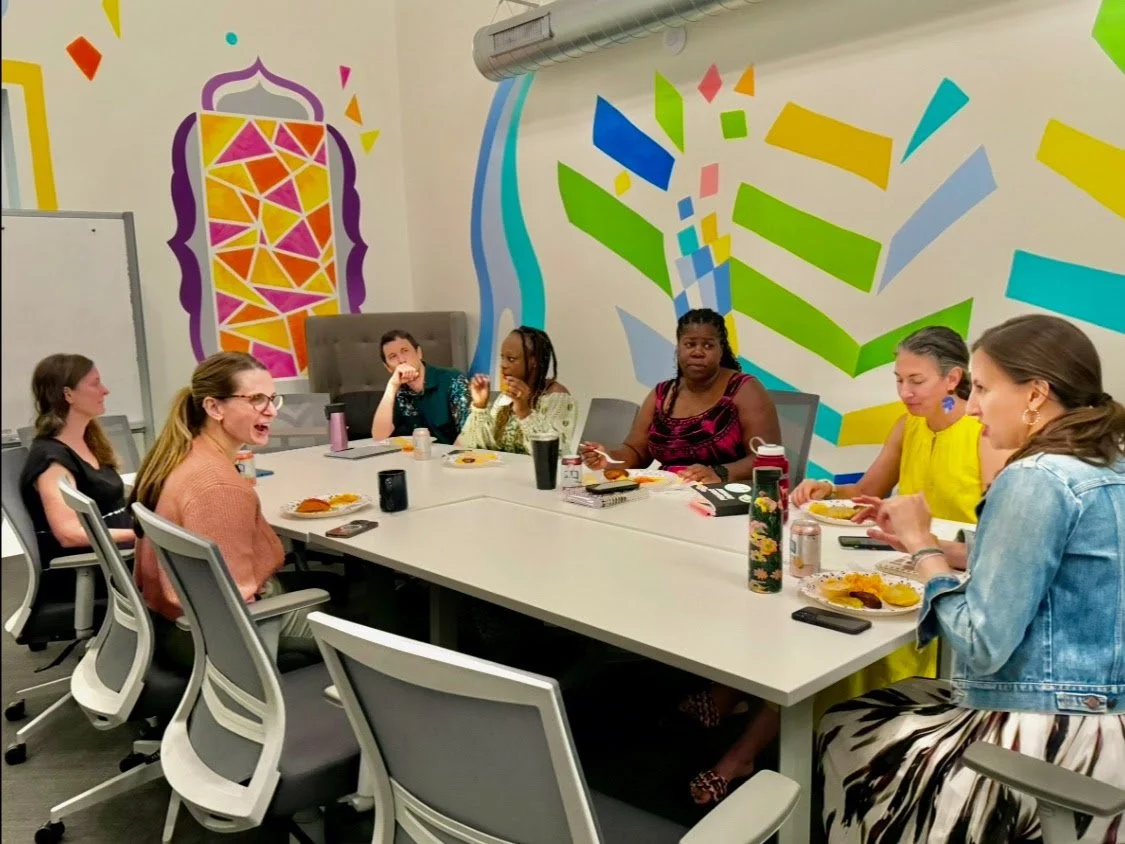
For the past few years, I have found safety and respite in my cozy home office. But this year, with everything going on, I have found working alone to feel pretty isolating. I know that I need to be with people right now.
One way I am meeting this need is by working more often at The Blake Annex co-working space. Being with other people there does not change the reality of what is happening, but I find that it helps me to feel more connected, inspired and hopeful (and I am making some new friends!)
We all need to be with people. One of the most fundamental drivers of being human is to belong somewhere (anywhere!). But not all forms of community are created equal. And when people are isolated and disengaged, they are more susceptible to finding belonging in not so positive places (think gangs, paramilitaries and other extremist groups) (Ferguson, 2021).
I recently dusted off my copy of Bowling Alone: The Collapse and Revival of American Community by Robert Putnam. It is a book that was published back in 2000 and one that I purchased in 2018 when I first started Dinner & Dialogue. After learning (in this interview) that this book informed the new administration's tactics to target the disconnected, I felt it was important to refer to again.
In this book, Putnam lays out the importance of “social capital” and that the way we participate socially directly correlates to how successful our democracy is. Even in the nineties, (before social media) our time spent with other people was starting to dwindle and Putnam was sounding the alarm of the potential negative consequences of this. He defines social capital as:
“connections among individuals - social networks and the norms of reciprocity and trustworthiness that arise from them”
The book highlights two main types of social capital: bonding and bridging. Each has the potential to have powerful social effects (Putnam, 2000).
This of course, relates directly to communities. The bonding kind is easier to form because these communities are based on being alike. And, though it is important for us to belong to groups of like-minded people - these kinds of communities have a greater capacity to divide societies. Connecting over a shared identity and against another group may be fun in sports but in real life it can feed directly into a conflict entrepreneur's (see my last newsletter) tactics of using "us vs them" dynamics to gain power.
The bridging kind of community is more challenging to create because it brings us together with people who may be different than us. But these are the richer, more dynamic and powerful forms of being with others.
Research suggests that participating in bridging social capital is associated with improved community health and well-being. In addition, participating in diverse networks and speaking with others about timely and important topics can foster political tolerance and ultimately help to reduce polarization and identity-based extremism (Office of the Surgeon General, 2023).
One tip Putnam gives us is to make sure you bond when you bridge. Find a common activity to connect over (like eating, playing bocce, volunteering, painting, joining your neighborhood association…you get the point).
We must get creative and develop more opportunities to participate in bridging social capital. We must have the courage to get to know our neighbors, to have conversations with people from other groups so that we cannot be manipulated by the continued movement to divide and control us.
In short, finding even small ways to be with other people and participate in a bridging type of community is one way to directly resist authoritarianism.
Bold statement I know.
Bridging in your own context
Bridging and connecting across differences is important in all contexts. And I would love to support you in planning deliberate interventions in your own communities.
To do this:
Set up a call with me and I can give you some ideas of how to better engage, build trust and/or navigate a conflict in your community
And if you want to take this a step further:
I could develop a recommended program for you to implement on your own - no facilitator needed
Join or Die
Also! If you want to learn more about Robert Putnam, his book(s) and the importance of social capital - check out the very entertaining and informative documentary called Join or Die
It’s great and may even inspire you to join a club. Not just for yourself, but for democracy.
Until next time - take care of yourself and others out there!