Enough
Photograph by Ellen Cosgrove
Getting take-out Chinese food was the ultimate treat when I was growing up. Even though my parents ordered plenty of food, my siblings and I moved fast to fill up our plates. There was this inherent feeling that there was not enough.
So maybe you did not grow up in a family of competitive eaters, but we all know what it feels like to not have enough. Whether it is time, energy or the wherewithal. We so often only focus on what is not there.
As a society we tend to concentrate on what we do not have and are bombarded with advertisements for things we are told we need. We are consistently consuming in order to keep up and striving for more. But when do we have enough?
The abundance of food in this country can be overwhelming. Whether you are walking down the streets of NYC or through the aisles of Whole Foods, there is just so much food. But yet just outside the store and around the world, there are so many hungry people.
Scarcity though, can breed creativity. Many cuisines most delicious dishes stem from a moment in history when people did not enough and they creatively used what they had. Some of the most satisfying meals I have created, came from having seemingly nothing in the fridge.
So is there a dish that you make that can feed an army? Or one that reminds you of a time you or your family had to get creative?
Walking down the streets of New York, you are constantly reminded of those that do not have enough. The homeless population seems to be growing and at this moment the disparity of wealth in this city seems particulary apparent. It is one of the reasons why I chose to live here, to see it all everyday. But the constant reminder of the inequity of this city and the world can ware on you and leave you to feel helpless.
Having enough food is a basic human need on so many levels. And then having enough real food is a whole other level. Each week I work with people whose access to food is alarmingly different. From those incredibly health conscious individuals who have the privilege to control the quality of everything that enters their body to those who are frankly, hungry. At times one population does not necessarily seem that happier then the other but the difference in their reality is astounding.
I remember as a kid, stopping by our family friends grandmother’s house (apparently unannounced) and having her exclaim that she did not have enough food in the house to feed us. I watched with awe as she created a delicious feast from seemingly nothing. Things were pulled from the freezer, tomatoes were fried and pita toasted in the oven. It was like magic. Though I will never be such a food magician, I have noticed that some of my most creative meals have been created from an apparent bare fridge. If only we could all really create something from nothing.
The recipe below reminds me of that delicious meal at my friends grandmother’s house. Mujadara is a Syrian staple that is nutritious and delicious but also satisfying enough to feed a hungry (and possibly unexpected) crowd.
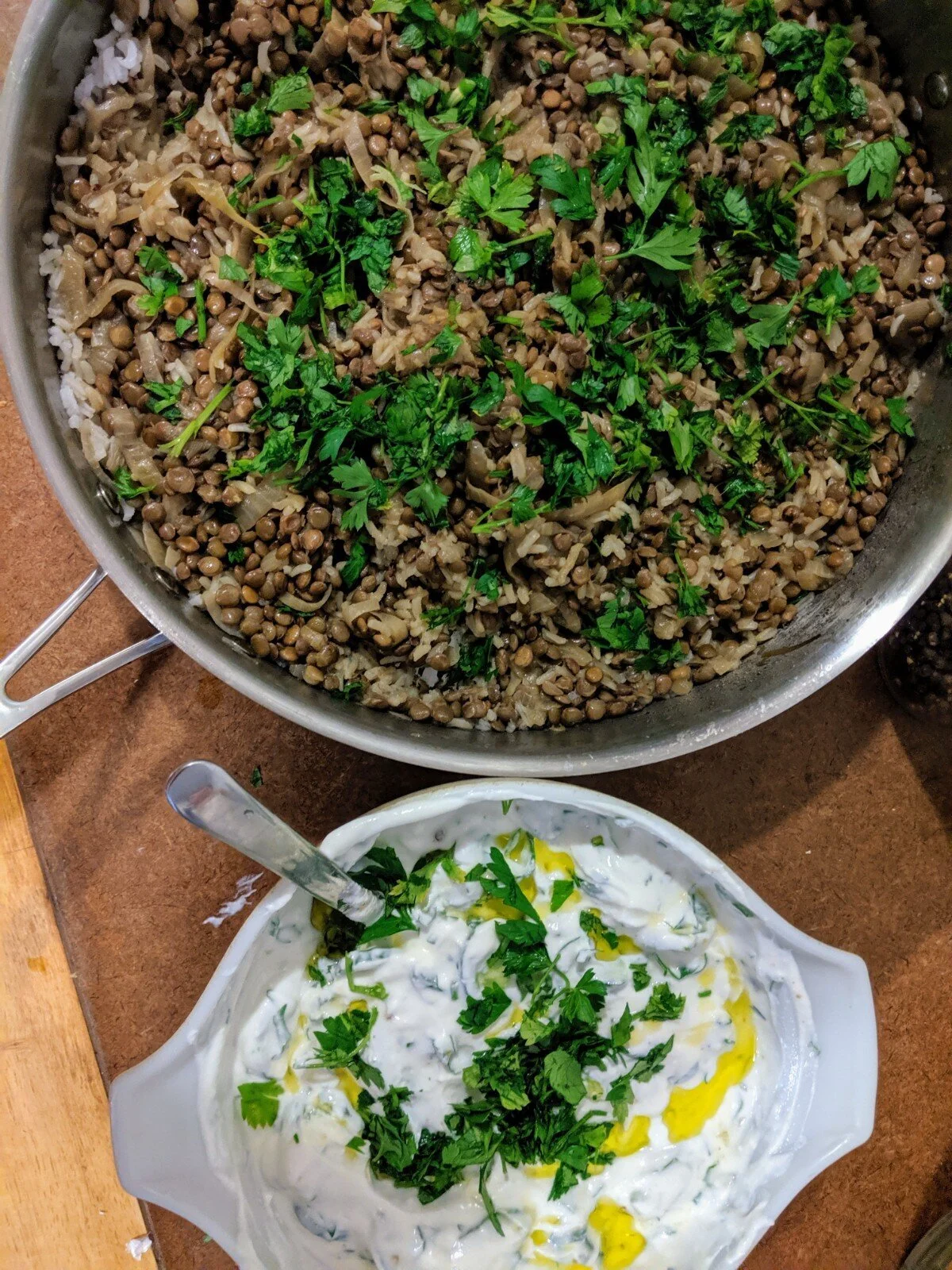
Photo by Ian Stuart
Mujadara
(adapted from https://www.themediterraneandish.com/mujadara-lentils-and-rice-with-crispy-onions/)
1 cup lentils, sorted and rinsed
4 cups water, divided
1/4 cup extra virgin olive oil, more for later
2 large yellow onions, diced (4 cups)
1 tsp kosher salt, more to taste
1 cup long-grain white rice, soaked in water for 10–15 minutes and then drained
black pepper
Parsley or parsley flakes for garnish
1) Place the lentils in a small saucepan with 2 cups of the water. Bring the water to a boil over high heat, and then reduce the heat and simmer, cover until the lentils are par-boiled (10-12 minutes). Remove from the heat, drain the lentils and set them aside.
2) In a large saute pan with a lid, heat the oil over medium-high heat. Add the diced onions and cook until the onions are dark golden brown, darker than typical caramelized onions (about 40 minutes), sprinkle the onions with a teaspoon of salt as they cook.
3) Carefully pour the remaining 2 cups of water, bring the water to a boil over high heat, and then reduce the heat to low and simmer for 2 minutes. Stir the rice and par-cooked lentils into the onion mixture. Cover and bring back to a boil. Stir in a healthy pinch of salt and the black pepper. Reduce the heat to low, cover, and cook until the liquid has been absorbed and the rice and lentils are both cooked through (about 20 minutes). Remove from the heat and season with salt and pepper to taste.
4) Serve the Mujadara hot or at room temperature with a drizzle of extra virgin olive oil and parsley garnish, if you like.